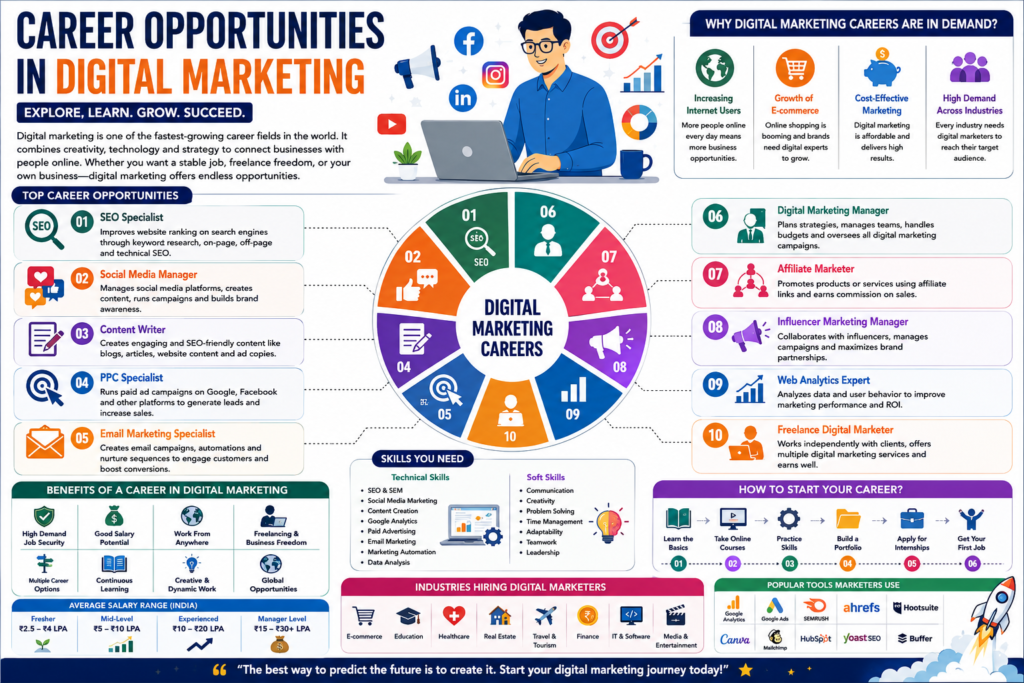
Introduction The digital world has changed the way businesses connect with customers. Today, almost every company uses online platforms to promote products and services. From social media campaigns to search engine optimization, digital marketing has become one of the fastest-growing industries in the world. Because of this rapid growth, career opportunities in digital marketing are increasing every year. Digital marketing is not limited to large companies only. Small businesses, startups, influencers, educational institutes, healthcare brands, and e-commerce companies all depend on digital marketing to reach their audience. This demand has created thousands of job opportunities for students, freelancers, professionals, and entrepreneurs. One of the biggest advantages of digital marketing careers is flexibility. You can work full-time, part-time, remotely, or even start your own agency. Whether someone is creative, technical, analytical, or communication-focused, digital marketing offers career options for every skill set. In this blog, we will explore the major career opportunities in digital marketing, their benefits, required skills, examples, salary potential, and future growth. What is Digital Marketing? Digital marketing is the process of promoting products or services using online channels such as websites, search engines, social media, email, and mobile applications. It includes multiple strategies like: Search Engine Optimization (SEO) Social Media Marketing (SMM) Content Marketing Email Marketing Pay-Per-Click Advertising (PPC) Affiliate Marketing Influencer Marketing Video Marketing Businesses use these methods to attract customers, generate leads, increase sales, and build brand awareness. Why Digital Marketing Careers Are Growing 1. Increasing Internet Users Millions of people use the internet daily for shopping, learning, entertainment, and communication. Businesses want to reach these users online, which increases the demand for digital marketers. Example An online clothing store uses social media ads and SEO to attract customers from different cities and countries. 2. Growth of E-commerce Online shopping platforms are growing rapidly. Companies need digital marketing experts to promote products and compete in the market. Example E-commerce companies run Google Ads, influencer campaigns, and email promotions to increase sales. 3. Cost-Effective Marketing Digital marketing is more affordable than traditional marketing methods like TV, radio, and newspapers. Example A small business can promote products on social media with a limited budget and still reach thousands of customers. 4. High Demand Across Industries Every industry now requires digital marketing professionals. Industries using digital marketing include: Education Healthcare Real Estate Tourism Technology Fashion Finance Food Industry Top Career Opportunities in Digital Marketing 1. SEO Specialist SEO specialists improve website rankings on search engines like Google. Main Responsibilities Keyword research On-page SEO Technical SEO Link building Website optimization Skills Required SEO tools knowledge Analytical thinking Content optimization Problem-solving Example An SEO specialist helps a travel website appear on the first page of search results for “best tourist places in India.” Benefits High demand worldwide Freelancing opportunities Remote work flexibility 2. Social Media Manager Social media managers handle brand promotion on platforms like Instagram, Facebook, LinkedIn, and X. Main Responsibilities Creating social media posts Managing campaigns Increasing engagement Responding to followers Tracking performance Skills Required Creativity Communication skills Trend awareness Graphic content understanding Example A restaurant hires a social media manager to create food reels and attract local customers. Benefits Creative work environment Opportunity to work with brands Strong career growth 3. Content Writer Content writers create blogs, articles, website content, scripts, and marketing copies. Main Responsibilities Writing SEO-friendly articles Researching topics Creating engaging content Editing and proofreading Skills Required Writing ability Grammar knowledge Research skills SEO understanding Example A content writer creates educational blogs for a digital marketing institute. Benefits Work from home opportunities Freelancing options High demand in every industry 4. PPC Specialist PPC specialists manage paid advertising campaigns on search engines and social media. Main Responsibilities Running ads Budget management Keyword targeting Performance analysis Increasing ROI Skills Required Data analysis Advertising knowledge Campaign optimization Strategic planning Example An online electronics company uses PPC ads during festival sales to increase purchases. Benefits High-paying career Strong demand in e-commerce Performance-based growth 5. Email Marketing Specialist Email marketing specialists create campaigns to engage customers and increase conversions. Main Responsibilities Writing email campaigns Audience segmentation Automation setup Tracking open and click rates Skills Required Copywriting Marketing strategy Customer psychology Email automation tools Example An online course platform sends promotional emails to students about new courses. Benefits Important role in lead generation Strong ROI-focused career Opportunities in multiple industries 6. Digital Marketing Manager Digital marketing managers oversee complete online marketing strategies. Main Responsibilities Team management Campaign planning Budget handling Strategy development Performance monitoring Skills Required Leadership Marketing expertise Communication Analytical thinking Example A digital marketing manager handles SEO, social media, and advertising campaigns for a brand. Benefits Senior-level position Excellent salary packages Leadership opportunities 7. Affiliate Marketer Affiliate marketers earn commissions by promoting products online. Main Responsibilities Promoting products Creating reviews and content Generating sales through referral links Skills Required Blogging SEO Social media promotion Marketing strategy Example A blogger earns income by promoting technology products through affiliate links. Benefits Passive income opportunities Flexible work schedule Low investment career 8. Influencer Marketing Manager Influencer marketing managers coordinate collaborations between brands and influencers. Main Responsibilities Finding influencers Campaign management Negotiation Performance tracking Skills Required Communication Networking Trend analysis Social media knowledge Example A beauty brand collaborates with influencers to promote skincare products. Benefits Exciting and modern career Fast-growing industry Strong networking opportunities 9. Web Analytics Expert Analytics experts study data to improve marketing performance. Main Responsibilities Tracking website traffic User behavior analysis Conversion tracking Reporting insights Skills Required Data analysis Reporting tools Critical thinking Marketing understanding Example An analytics expert identifies why customers leave an e-commerce website before purchasing. Benefits Data-driven career High salary potential Important for business growth 10. Freelance Digital Marketer Freelancers provide digital marketing services independently. Main Responsibilities Managing client projects SEO and social media services Content creation Advertising campaigns Skills Required Time management Communication Self-discipline Marketing expertise Example A freelancer handles social media marketing for local businesses. Benefits Work from anywhere Unlimited earning potential Flexible working hours Skills Required for a Digital Marketing Career Technical Skills