Introduction
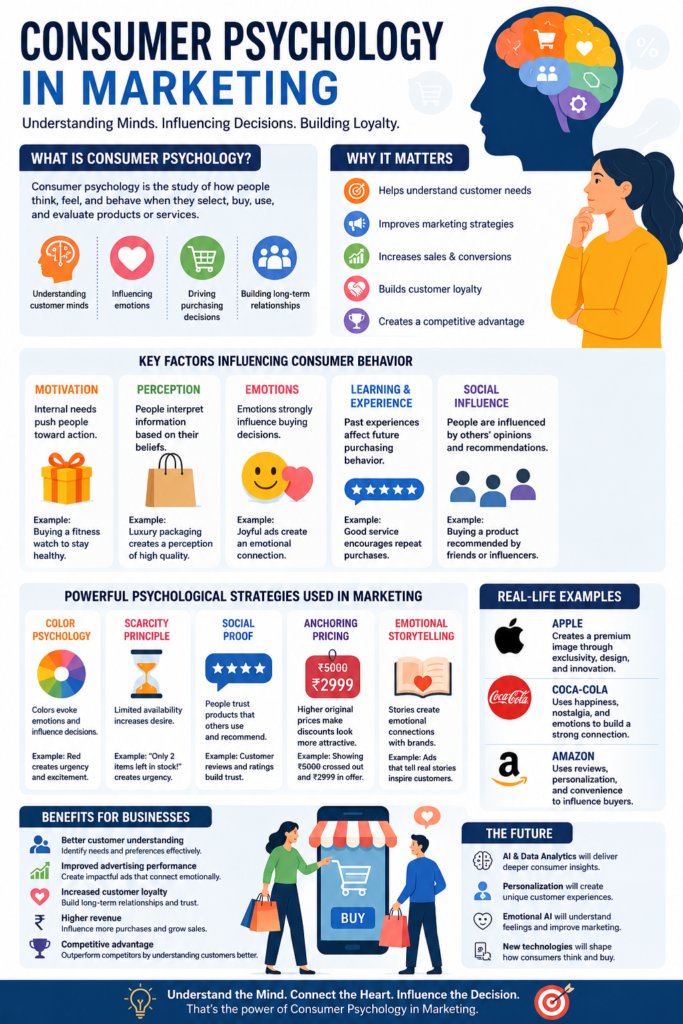
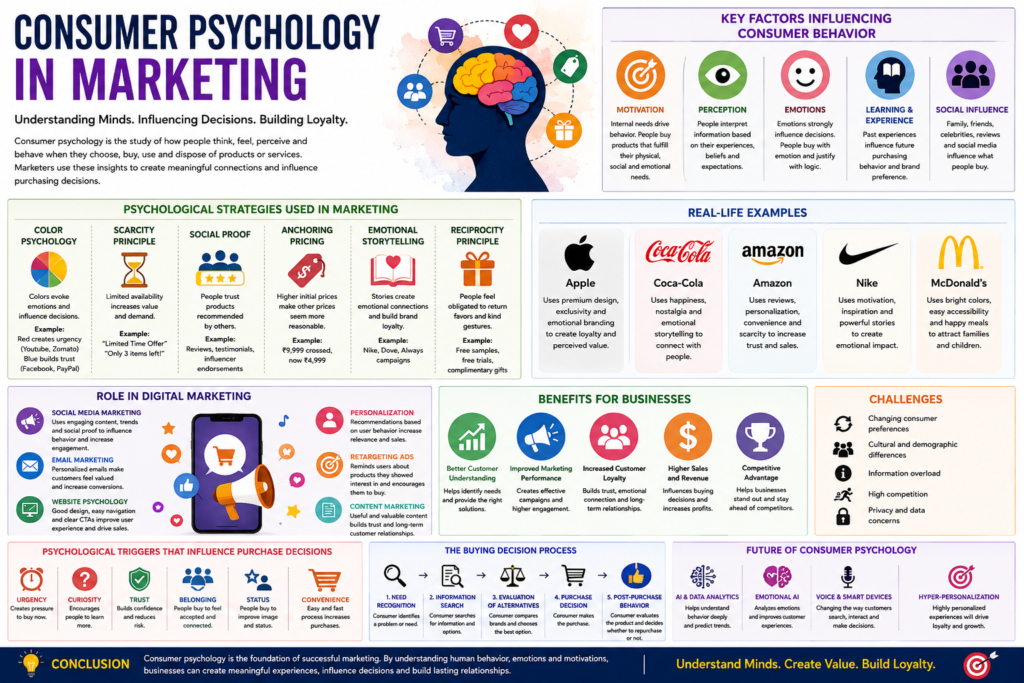
Consumer psychology in marketing is the study of how people think, feel, decide, and behave when purchasing products or services. It helps businesses understand why customers buy certain products, what influences their decisions, and how marketing strategies can attract and retain buyers.
In today’s competitive market, companies are not just selling products—they are selling emotions, experiences, trust, and solutions. Successful brands understand customer behavior deeply and use psychological principles to improve advertising, branding, pricing, and customer engagement.
For example, when a customer buys a premium smartphone, they may not only purchase it for technical features but also for status, design, and emotional satisfaction. This is where consumer psychology becomes important.
This blog explains the meaning of consumer psychology, its importance in marketing, major psychological factors, strategies used by marketers, real-life examples, and benefits for businesses.
What is Consumer Psychology?
Consumer psychology is a branch of psychology that studies how consumers make buying decisions. It analyzes customer emotions, motivations, perceptions, beliefs, and purchasing habits.
In marketing, consumer psychology helps businesses answer questions such as:
- Why do customers prefer one brand over another?
- What motivates people to buy?
- How do colors, pricing, and advertisements influence decisions?
- What emotional triggers affect consumer behavior?
Understanding these factors allows businesses to create better marketing campaigns and improve customer satisfaction.
Importance of Consumer Psychology in Marketing
Consumer psychology is essential because it helps businesses connect with customers more effectively.
1. Understand Customer Needs
Businesses can identify what customers want and create products that solve their problems.
Example
A skincare company studies customer concerns about acne and launches specialized products targeting that issue.
Benefit
- Better product development
- Increased customer satisfaction
- Higher sales
2. Improve Marketing Strategies
Psychological insights help companies design advertisements that emotionally connect with consumers.
Example
Food advertisements often show happy families enjoying meals together to create emotional attachment.
Benefit
- Stronger brand connection
- Better customer engagement
- More effective advertising
3. Increase Sales and Conversions
Understanding buying behavior helps marketers influence purchasing decisions.
Example
Limited-time discounts create urgency and encourage faster purchases.
Benefit
- Increased conversions
- Faster buying decisions
- Higher revenue
4. Build Customer Loyalty
Brands that understand customer emotions can create long-term relationships.
Example
Coffee shops offering loyalty rewards encourage repeat purchases.
Benefit
- Repeat customers
- Higher customer retention
- Strong brand loyalty
Key Factors Influencing Consumer Psychology
Several psychological factors affect consumer decisions.
1. Motivation
Motivation is the internal desire that pushes customers to buy products or services.
Customers buy products to fulfill needs such as:
- Comfort
- Safety
- Social status
- Happiness
- Convenience
Example
People buy fitness equipment to improve health and confidence.
Benefit for Businesses
- Helps target customer needs
- Improves product positioning
- Increases demand
2. Perception
Perception refers to how customers interpret information about a product or brand.
Different customers may view the same product differently based on experiences and beliefs.
Example
Luxury brands use premium packaging to create a perception of high quality.
Benefit
- Strong brand image
- Better customer trust
- Higher perceived value
3. Emotions
Emotions strongly influence purchasing decisions. Customers often buy emotionally first and justify logically later.
Common Emotional Triggers
- Happiness
- Fear
- Excitement
- Trust
- Belonging
Example
Insurance advertisements often use fear and security emotions to encourage purchases.
Benefit
- Strong emotional connection
- Increased customer engagement
- Better brand recall
4. Learning and Experience
Past experiences influence future buying decisions.
If customers have positive experiences, they are more likely to buy again.
Example
A customer who receives excellent service from an online store is likely to return for future purchases.
Benefit
- Higher customer retention
- Positive word-of-mouth marketing
- Stronger customer trust
5. Social Influence
People are influenced by family, friends, celebrities, and social media.
Example
Customers often buy products recommended by influencers or online reviews.
Benefit
- Increased credibility
- Better brand visibility
- More customer trust
Consumer Psychology Strategies Used in Marketing
Businesses use several psychological techniques to attract customers.
1. Color Psychology
Colors affect emotions and buying behavior.
Common Color Meanings
- Red: Excitement and urgency
- Blue: Trust and professionalism
- Green: Health and nature
- Black: Luxury and power
- Yellow: Happiness and positivity
Example
Fast-food brands use red and yellow because these colors attract attention and stimulate appetite.
Benefits
- Better brand recognition
- Emotional influence
- Improved customer response
2. Scarcity Principle
People value products more when they are limited.
Example
“Only 2 items left” or “Limited-time offer” creates urgency.
Benefit
- Faster purchases
- Increased demand
- Higher sales
3. Social Proof
Customers trust products used or recommended by others.
Types of Social Proof
- Customer reviews
- Testimonials
- Influencer endorsements
- Ratings
Example
E-commerce websites display product ratings to influence buyers.
Benefit
- Builds trust
- Reduces buying hesitation
- Improves conversions
4. Anchoring Pricing Strategy
Customers compare prices before making decisions.
Marketers show higher prices first so lower prices appear more attractive.
Example
A product originally priced at ₹5000 shown at ₹2999 seems like a great deal.
Benefit
- Higher perceived savings
- Better sales performance
- Improved purchase decisions
5. Emotional Storytelling
Stories help customers connect emotionally with brands.
Example
Advertisements showing personal struggles and success stories create emotional engagement.
Benefit
- Stronger customer relationships
- Better brand memory
- Increased emotional attachment
Role of Consumer Psychology in Digital Marketing
Consumer psychology plays a major role in digital marketing strategies.
1. Social Media Marketing
Social media platforms use psychological triggers like likes, shares, and comments to encourage engagement.
Example
Brands create relatable content to increase audience interaction.
Benefit
- Better engagement
- Stronger community building
- Increased brand awareness
2. Email Marketing
Personalized emails make customers feel valued.
Example
“Special offer just for you” creates personal connection.
Benefit
- Higher open rates
- Increased conversions
- Better customer relationships
3. Website Design Psychology
Website layout, colors, and navigation affect customer behavior.
Example
Simple checkout processes reduce customer frustration and cart abandonment.
Benefit
- Better user experience
- Increased sales
- Improved customer satisfaction
4. Personalized Marketing
Businesses analyze customer data to provide personalized recommendations.
Example
Streaming platforms recommend movies based on viewing history.
Benefit
- Better customer experience
- Higher engagement
- Increased loyalty
Real-Life Examples of Consumer Psychology in Marketing
1. Apple
Apple Inc. creates a premium image through sleek design, minimal advertising style, and emotional branding.
Psychological Techniques Used
- Exclusivity
- Premium perception
- Emotional connection
Result
Customers associate Apple products with innovation and status.
2. Coca-Cola
The Coca-Cola Company uses happiness and emotional storytelling in advertisements.
Psychological Techniques Used
- Positive emotions
- Family connection
- Nostalgia
Result
Strong emotional bond with customers worldwide.
3. Amazon
Amazon uses customer reviews, personalized recommendations, and urgency tactics.
Psychological Techniques Used
- Social proof
- Convenience
- Scarcity
Result
Higher customer trust and increased online sales.
Benefits of Understanding Consumer Psychology
Understanding consumer psychology provides many advantages for businesses.
1. Better Customer Understanding
Businesses can identify customer needs and preferences more effectively.
Benefit
- Improved products and services
- Better customer satisfaction
2. Improved Advertising Performance
Psychological marketing creates more effective advertisements.
Benefit
- Higher engagement
- Better conversion rates
3. Increased Customer Loyalty
Emotional connections encourage long-term relationships.
Benefit
- Repeat purchases
- Strong brand reputation
4. Higher Revenue
Businesses can influence purchasing decisions more successfully.
Benefit
- Increased sales
- Better profitability
5. Competitive Advantage
Companies that understand customer psychology outperform competitors.
Benefit
- Strong market position
- Better customer retention
Challenges in Consumer Psychology
Despite its benefits, understanding consumer behavior can be difficult.
Common Challenges
- Changing customer preferences
- Cultural differences
- Technological changes
- Information overload
- High competition
Businesses must continuously study customer behavior to remain successful.
Future of Consumer Psychology in Marketing
Consumer psychology will become even more important in the future because of advanced technology and changing consumer expectations.
Future Trends
Artificial Intelligence (AI)
AI helps businesses analyze customer behavior and personalize experiences.
Voice Search and Smart Devices
Marketers must understand conversational behavior and voice search patterns.
Data-Driven Personalization
Companies will create highly personalized marketing campaigns using customer data.
Emotional AI
Technology may analyze customer emotions to improve marketing strategies.
Conclusion
Consumer psychology in marketing helps businesses understand how customers think, feel, and make purchasing decisions. It plays a major role in branding, advertising, pricing, customer engagement, and digital marketing.
By understanding emotions, motivations, perceptions, and social influences, businesses can create stronger connections with customers and improve their marketing performance. Strategies like emotional storytelling, social proof, scarcity, and personalized marketing help brands influence consumer behavior effectively.
In the modern digital world, companies that understand consumer psychology gain a significant competitive advantage. Businesses that focus on customer emotions, experiences, and satisfaction are more likely to build trust, increase loyalty, and achieve long-term success.