
Social Media Marketing

Social Media Marketing

Affiliate Marketing: A Simple Guide for Beginners

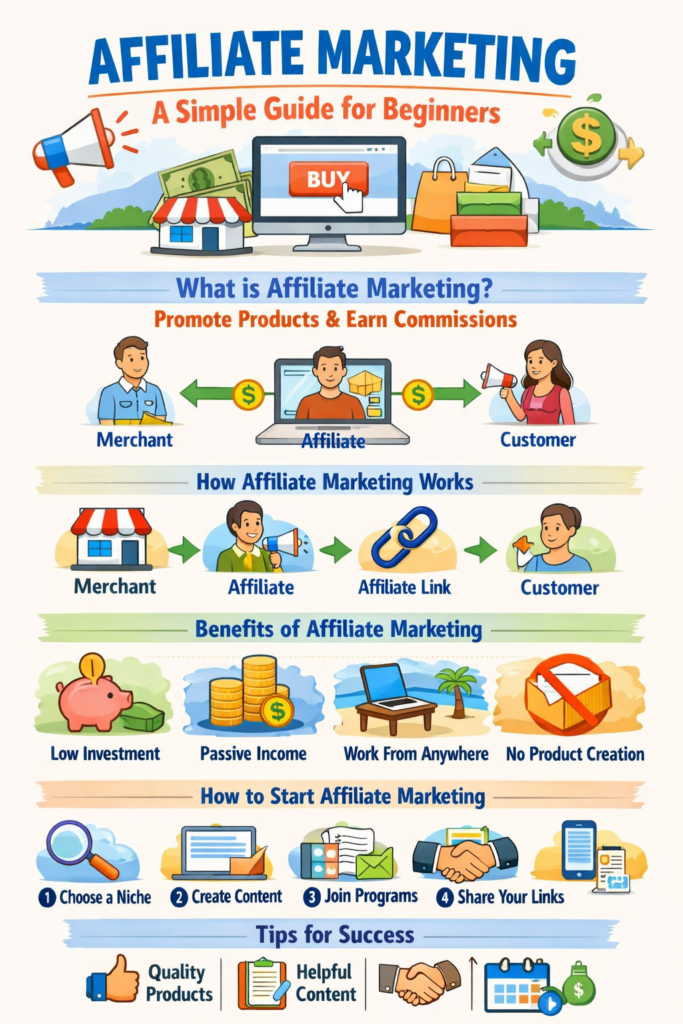
Introduction Affiliate marketing is one of the easiest ways to earn money online. Many people around the world use affiliate marketing to make extra income or even a full-time career. The best thing about affiliate marketing is that you do not need to create your own product. You only promote other people’s products and earn a commission when someone buys through your link. Today, many businesses use affiliate marketing because it helps them reach more customers. Bloggers, YouTubers, influencers, and website owners promote products and earn money. If you want to start earning online, affiliate marketing can be a good option. In this blog, we will understand what affiliate marketing is, how it works, its benefits, and how beginners can start affiliate marketing step by step. What is Affiliate Marketing? Affiliate marketing is a type of digital marketing where a person promotes another company’s product and earns a commission for every sale made through their referral link. In simple words, affiliate marketing means promoting products and earning money when someone buys them through your link. For example, if you promote a mobile phone online and someone buys it using your affiliate link, you will receive a small percentage of the sale as commission. Many companies use affiliate marketing programs to increase their sales and reach more customers. How Affiliate Marketing Works Affiliate marketing works through a simple process. There are usually four main parts involved in affiliate marketing. 1. The Merchant The merchant is the company or brand that sells the product. They create the product and allow affiliates to promote it. Examples include companies that sell clothes, electronics, software, or online courses. 2. The Affiliate The affiliate is the person who promotes the product. Affiliates can be bloggers, influencers, website owners, or digital marketers. They promote products through blogs, social media, YouTube videos, or websites. 3. The Affiliate Link The affiliate link is a special tracking link given to the affiliate. When someone clicks this link and buys the product, the system tracks the sale and gives commission to the affiliate. 4. The Customer The customer is the person who buys the product through the affiliate link. When the purchase is completed, the affiliate receives a commission. Types of Affiliate Marketing Affiliate marketing can be done in different ways. Here are some common types. 1. Unattached Affiliate Marketing In this type, the affiliate promotes products without having a direct connection with them. For example, running ads to promote products without personally using them. 2. Related Affiliate Marketing In this type, the affiliate promotes products related to their niche or audience. For example, a fitness blogger promoting gym equipment. 3. Involved Affiliate Marketing In this type, the affiliate personally uses the product and then promotes it. This method builds more trust with the audience because the affiliate gives honest reviews. Benefits of Affiliate Marketing Affiliate marketing has many advantages. This is why many people choose it as an online income source. 1. Low Investment You do not need a large investment to start affiliate marketing. You only need a website, blog, or social media account. 2. No Product Creation You do not need to create your own product. The company handles product creation, delivery, and customer support. 3. Work From Anywhere Affiliate marketing allows you to work from home or anywhere in the world. All you need is a laptop and internet connection. 4. Passive Income Once your content is online, it can keep generating sales and commissions for a long time. 5. Flexible Work You can work anytime you want. Affiliate marketing gives you the freedom to manage your own time. How to Start Affiliate Marketing If you are a beginner, you can start affiliate marketing by following these simple steps. Step 1: Choose a Niche A niche is a specific topic or category you want to focus on. Some popular niches include: Technology Fitness Beauty Travel Education Digital marketing Choosing the right niche helps you target the right audience. Step 2: Create a Platform You need a platform where you will promote products. Common platforms include: Blog or website YouTube channel Instagram Facebook TikTok Many affiliate marketers prefer blogs because they help attract organic traffic through search engines. Step 3: Join Affiliate Programs Next, you need to join affiliate marketing programs. After joining, you will receive unique affiliate links for products. Some companies offer affiliate programs for different types of products and services. Step 4: Create Helpful Content Content is very important in affiliate marketing. You can create different types of content such as: Product reviews Tutorials Comparison articles How-to guides Good content helps people trust your recommendations. Step 5: Promote Your Affiliate Links Once your content is ready, you can share your affiliate links in: Blog posts Social media posts YouTube video descriptions Email newsletters When people click your link and buy a product, you earn a commission.   Best Content Ideas for Affiliate Marketing Creating useful content helps increase sales. Here are some popular affiliate content ideas. Product Reviews Write honest reviews about products. Explain features, benefits, and your experience with the product. Comparison Articles Compare two or more products and help readers choose the best one. Example:“Best Smartphones Under $500” Tutorials Show people how to use a product or solve a problem. Example:“How to Start a Blog Step by Step” List Articles List articles are very popular in affiliate marketing. Example:“10 Best Laptops for Students” Tips for Successful Affiliate Marketing If you want to succeed in affiliate marketing, follow these tips. Choose Quality Products Always promote good and trusted products. This helps build trust with your audience. Focus on Helpful Content Your content should solve problems or answer questions. Build Trust With Your Audience People buy products when they trust your recommendations. Learn Basic SEO Search Engine Optimization helps your blog rank on search engines and bring free traffic. Be Consistent Affiliate marketing takes time. Keep creating content regularly and be patient. Common Mistakes in Affiliate Marketing Many beginners make mistakes when starting affiliate

Social Media Marketing

What is SMM and How Does It Work?

Introduction In today’s digital world, social media has become a powerful part of our daily life. People spend hours scrolling, watching videos, liking posts, and connecting with friends. Platforms like Facebook, Instagram, LinkedIn, and YouTube are not just for entertainment anymore. They are now strong marketing tools for businesses. This is where SMM comes in. SMM helps businesses connect with their target audience, promote products, and increase sales through social media platforms. In this blog, we will understand what SMM is, why it is important, and how it works step by step in simple language. What is SMM? SMM stands for Social Media Marketing. It is the process of using social media platforms to promote a brand, product, or service. In simple words, SMM means marketing your business on social media. The main goals of SMM are: Increase brand awareness Connect with customers Drive website traffic Generate leads Increase sales Businesses create posts, images, videos, reels, and ads to attract people’s attention. With the right strategy, SMM can help a business grow faster and reach thousands or even millions of people. Why is SMM Important? Social media is one of the most active online spaces. Millions of people use social media every day. If your business is not on social media, you are missing a big opportunity. Here are some important reasons why SMM is important: 1. Direct Connection with Customers Social media allows businesses to communicate directly with customers. You can reply to comments, answer questions, and solve problems instantly. 2. Builds Brand Awareness Regular posting helps people recognize your brand. The more people see your content, the more they remember your business. 3. Increases Engagement Likes, shares, comments, and messages increase interaction with your audience. High engagement builds trust. 4. Cost-Effective Marketing Creating social media accounts is free. Even paid ads are affordable compared to traditional marketing. 5. Helps Generate Leads and Sales With proper targeting and strategy, social media can bring quality leads and increase revenue. How Does SMM Work? SMM works through a step-by-step strategy. Let’s understand each step in simple language. Step 1: Create a Business Profile The first step is to create a professional business account on social media platforms. Your profile should include: Business name Logo Clear bio or description Contact details Website link A well-optimized profile builds trust and gives a professional impression. Step 2: Content Creation Content is the heart of social media marketing. Without good content, SMM cannot succeed. Types of content include: Images Videos Reels Stories Infographics Live sessions Content should be: Informative Attractive Easy to understand Valuable for the audience For example, if you run a digital marketing agency, you can post tips about SEO, social media growth, or online business ideas. Step 3: Audience Targeting Knowing your audience is very important. You must understand: Age group Location Interests Problems Buying behavior Using hashtags, keywords, and targeting options helps you reach the right people. For example: LinkedIn is good for B2B businesses. Instagram is good for fashion and lifestyle brands. YouTube is powerful for educational and video content. Targeting the right audience increases engagement and conversions. Step 4: Engagement and Interaction Posting content is not enough. You must interact with your audience. Engagement includes: Replying to comments Answering messages Liking and sharing user content Running polls and Q&A sessions When you respond quickly, customers feel valued and connected to your brand. Step 5: Paid Advertising Organic growth takes time. To get faster results, businesses use paid ads. Social media platforms allow businesses to: Target specific audiences Set budget Choose ad format Track performance Paid ads help increase: Reach Traffic Leads Sales With the right strategy, paid advertising can give strong and quick results. Types of Social Media Content Different types of content help achieve different goals. 1. Informative Content Educational posts that teach something useful. 2. Promotional Content Posts that promote products or services. 3. Entertaining Content Funny videos, memes, or creative posts that attract attention. 4. Inspirational Content Motivational quotes and success stories. 5. Customer Testimonials Reviews and feedback from happy customers. A good SMM strategy uses a mix of all these content types. Organic vs Paid SMM There are two main types of social media marketing: Organic and Paid. Organic SMM Organic SMM means growing your account naturally without paying for ads. Examples: Regular posting Using hashtags Engaging with followers Sharing stories Advantages: Free Builds long-term trust Disadvantages: Slow growth Limited reach Paid SMM Paid SMM means running sponsored advertisements. Advantages: Fast results Large reach Targeted audience Disadvantages: Requires budget Stops when ads stop The best strategy is to combine both organic and paid marketing. Benefits of SMM Here are the major benefits of social media marketing: 1. Increased Website Traffic Social media can bring visitors directly to your website. 2. Strong Brand Identity Consistent branding builds recognition. 3. Better Customer Relationship Two-way communication improves trust. 4. Higher Conversion Rate Targeted ads increase chances of sales. 5. Real-Time Performance Tracking You can track likes, clicks, shares, and conversions easily. Common Mistakes in SMM Many businesses make simple mistakes in social media marketing. Avoid these: Posting without a strategy Ignoring comments and messages Inconsistent posting Only promoting products Not analyzing performance Social media marketing needs planning, creativity, and consistency. How Long Does SMM Take to Show Results? SMM results depend on: Content quality Posting consistency Audience engagement Advertising budget Organic growth may take 3–6 months. Paid ads can give results within days or weeks. Consistency is the key to success in SMM. SMM Strategy for Beginners If you are starting SMM, follow these simple steps: Choose the right platform Create a content calendar Post 3–5 times per week Use relevant hashtags Engage daily with followers Track performance weekly Improve based on analytics Simple planning can bring powerful results. Future of Social Media Marketing Social media is constantly evolving. New trends include: Short-form videos Influencer marketing Live streaming AI-based targeting Social commerce (shopping directly on social platforms) Businesses that adapt to new trends grow faster than competitors.

Scroll to Top